Carbon Steel Deburring: Avoiding Heat Tint, Oxide, and Micro-Burrs
Carbon steel is a staple in fabrication shops around the world, but even the best cutting equipment leaves behind imperfections that need attention. Heat tint, oxide buildup, and micro-burrs may look minor, yet they can cause coating failures, welding issues, or safety concerns if not addressed early. A smart deburring and finishing workflow ensures carbon steel parts enter downstream processes clean, consistent, and ready for reliable production.

Key Takeaways
- Carbon steel regularly develops heat tint, oxide, and micro-burrs after cutting.
- Removing these defects early improves welding, coating, corrosion resistance, and safety.
- A proven workflow—deburring → oxide removal → edge rounding → surface conditioning—keeps parts predictable and production-ready.
- Automated solutions deliver cleaner and more consistent results than manual grinding in any real production scenario.
Carbon steel is a dependable workhorse across metal fabrication—strong, affordable, and easy to process. But regardless of whether it’s laser-cut, plasma-cut, punched, or machined, carbon steel almost always needs proper post-cut finishing.
Heat tint, oxide buildup, and micro-burrs might look like small imperfections, but they can lead to real problems later: coating failures, weld contamination, corrosion, and even handling injuries. A clean deburring workflow keeps these issues under control and ensures your parts move smoothly through downstream operations.
Why Carbon Steel Needs Finishing
Cutting carbon steel produces heat and friction, which naturally create surface defects. Some of the most common are:
Heat Tint
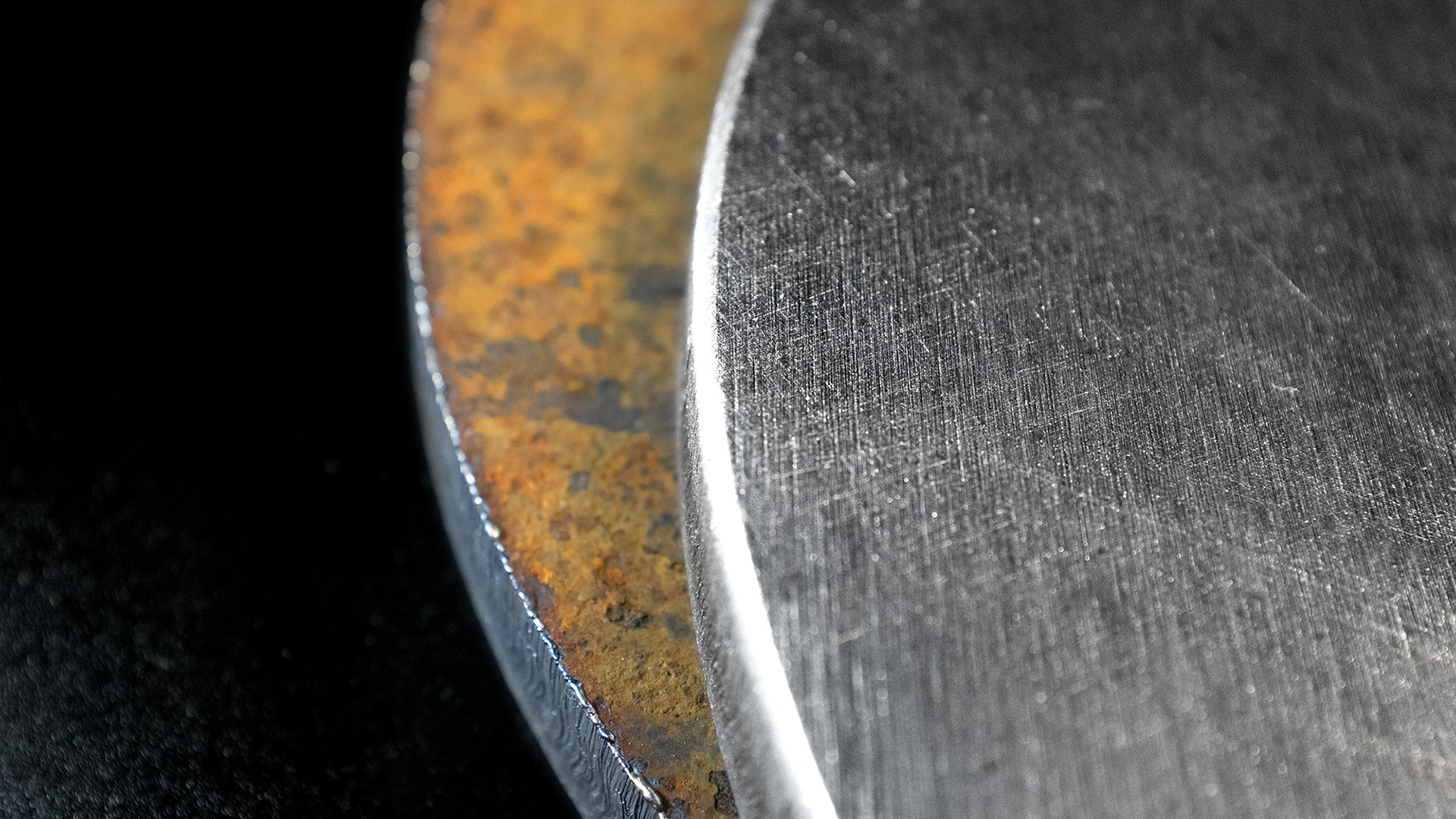
High-temperature cutting—especially with laser or plasma—can leave brown, blue, or straw-colored discoloration.
It may be cosmetic at first glance, but heat tint can interfere with coating adhesion and reduce long-term corrosion resistance.
Oxide Layer
Oxygen-assisted laser cutting and plasma cutting often leave a dark, brittle oxide layer on the cut edge.
This needs to be removed before welding or powder coating, otherwise it becomes a weak point where coatings peel or welds trap contaminants.
Micro-Burrs
Even high-quality cutting produces burrs around edges and holes.
Untreated micro-burrs can scratch adjacent parts, reduce coating wrap-around, and create unsafe sharp spots for operators.
A Practical Workflow to Eliminate These Issues
A reliable carbon steel finishing process usually follows four steps:
1. Burr Removal
Start by removing vertical burrs from laser cutting or machining.
Common tools include:
- Abrasive belts (drum heads)
- Rotary brushes for lateral burrs and internal features
This step establishes a clean, safe baseline edge.
2. Oxide Removal
Oxide left from thermal cutting doesn’t bond well with coatings or welds. Removing it early prevents issues down the line.
Effective methods:
- Abrasive belts for heavier oxide
- Top or rotary brushes for lighter oxide and interior geometry
This creates a clean, uniform surface for welding and powder coating.
3. Edge Rounding
If the part will be coated or frequently handled, edge rounding is a must.
A rounded edge:
- Improves powder and paint wrap-around
- Reduces coating chipping or flaking
- Enhances corrosion protection
- Makes handling safer
Rotary brush systems are excellent at producing smooth, consistent edge radiuses on carbon steel.
4. Surface Conditioning
A final finishing pass prepares the part for coating or assembly.
Common options:
- Non-directional finishing for coating prep
- Line-grain finishing for visible surfaces
This step can also help reduce heat tint or light surface oxidation.
Why Automation Makes a Difference
Manual grinding can work for one-offs, but it introduces too much variability in production environments. Automated finishing creates consistency by:
- Maintaining uniform pressure and brush height
- Delivering predictable oxide removal
- Eliminating operator-to-operator variation
- Reducing fatigue and safety risks
- Minimizing the chance of overheating or gouging
- Supporting clean, predictable downstream performance
For shops aiming for stable throughput and reliable quality, automation is simply the more efficient approach.
Recommended Machines for Carbon Steel Finishing
For Laser-Cut Carbon Steel
- EdgeX SDR – Precision deburring and edge rounding
- SurfeX SR – Non-directional finishing with edge rounding
- SurfeX SRS – Line-grain finishing for visible components
- FabGo 300 – Reliable finishing for growing fabrication shops
For Plasma-Cut Carbon Steel
- SlagMaster HSR – Slag Hammer system designed for heavy slag removal
For Complex or One-Off Parts
- MultiFlex – Hand-guided finishing with controllable pressure and precise handling
FAQs
1. Why does carbon steel develop heat tint during cutting?
Heat tint forms when cutting temperatures cause localized oxidation. It doesn’t affect structural integrity but can reduce coating adhesion and corrosion resistance if not removed.
2. Do oxide layers need to be removed before welding or coating?
Yes. Oxide layers from laser or plasma cutting create weak surfaces that lead to weld contamination or coating failure. Removing oxide ensures a clean bonding surface.
3. What’s the best way to remove micro-burrs on carbon steel?
Rotary brushes and abrasive belts are the most reliable methods for consistent micro-burr removal, especially on internal holes and complex contours.
4. Does edge rounding really improve coating performance?
Absolutely. Rounded edges allow powder and paint to wrap evenly around the part, reducing the chance of chipping, flaking, or corrosion along sharp corners.
5. Can manual tools replace automated deburring for carbon steel?
Manual grinding works for low-volume or one-off parts, but it introduces inconsistencies and risks. Automated systems deliver uniform pressure, cleaner oxide removal, and repeatable results at production scale.
6. What finishing method is best for visible carbon steel parts?
A line-grain finish using a machine like the SurfeX SRS produces a clean, directional surface ideal for visible components.
Looking to improve the finish, consistency, and downstream performance of your carbon steel parts? Our team can help you choose the right combination of deburring, oxide removal, edge rounding, and finishing solutions tailored to your workflow.Let’s build a finishing system that empowers your production.