Edge Radius for Coating: What the 1/16 in Rule Asks For
For fabricators quoting coated steel work where the drawing says "break all edges" or the spec names SSPC-PA 18. This post turns that edge language into a radius you can measure, compares radius, chamfer and stripe coating, and explains when a machine radius pays for itself.

Key Takeaways
- Coatings pull back from sharp corners as they cure, so the film is thinnest at the edge and fails there first.
- SSPC-PA 18 asks for at least a 1/16 in (1.6 mm) chamfer or radius on thermal-cut and sheared edges, and for the hardened cut surface to be removed.
- An R1.0 edge looks rounded but does not meet a 1/16 in requirement; check the number, not the feel.
- A radius holds film better than a chamfer, but producing one by hand is slow and inconsistent.
- On volume sheet and plate parts going to powder or wet paint, a machine radius checked with a gauge costs less than stripe coating every edge.
"Break all sharp edges" is one of the most common lines on a coated-steel drawing, and one of the least useful. It does not say how much, it does not say what shape, and it gives an inspector nothing to measure. When a coating spec does put a number on it, the number is usually small: at least 1/16 in (1.6 mm). This post explains what edge radius for coating actually means in a spec, why a radius beats a chamfer under paint and powder, and how to produce one that passes inspection on every part.
Our position is simple. For volume parts going to powder or wet paint, a consistent machine radius checked with a gauge is cheaper than stripe coating every edge by hand.
Why coatings fail first at sharp edges
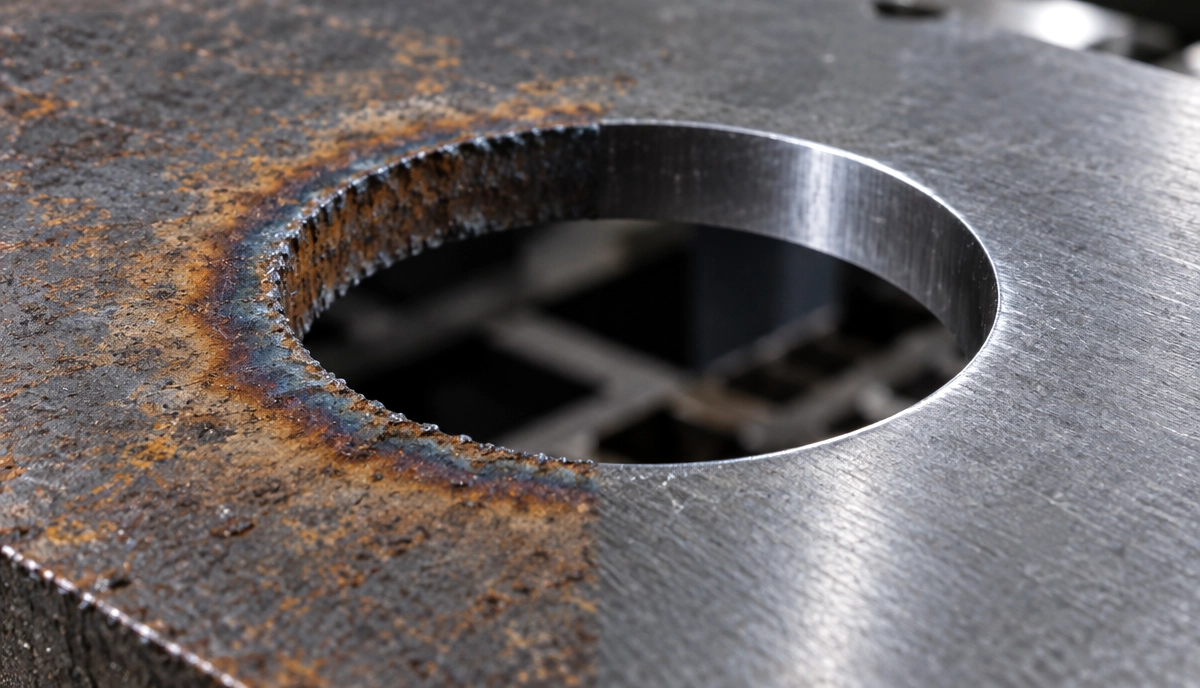
Liquid and powder coatings shrink as they cure, and surface tension pulls them away from a sharp corner. The flat face ends up at full film build while the apex of a 90° edge carries a fraction of it. That thin film is where rust starts and where chips begin.
KTA-Tator's technical article on preparing edges for coating performance describes how the industry measures this. Edge retention is the film thickness at the apex divided by the film thickness on the flat, tested on 90° angle specimens under a method published in MIL-PRF-23236. An average around 70% generally marks a coating as edge-retentive. Many coatings do not get there, which is why the steel has to help.
Thermal cutting adds a second problem. A Products Finishing Q&A on chipping edges explains that laser-cut carbon steel carries a hard oxide that typical pretreatment cleaners leave in place, so the coating has a poor surface to bond to at the exact spot where the film is already thinnest.
What SSPC-PA 18 asks for at the edge
SSPC-PA 18 is the specification that most often puts a number on edge preparation. As summarized in the KTA article, its edge profile section asks for three things:
- Remove the hardened layer. Thermal-cut edges must be ground or machined deep enough that grit blasting can produce the required surface profile.
- Break the corners. Flame-cut and sheared edges need at least a 1/16 in (1.6 mm) chamfer or radius. A full radius is not required.
- Leave good rolled edges alone. Rolled edges only need work if they are sharp or irregular.
Translated into shop terms, the minimum is R1.6 or a 1.6 mm (1/16") chamfer, measured on the finished part. This is where many shops get caught. A brushed edge at R0.5 or R1.0 looks and feels rounded, but it does not meet a 1/16 in requirement. If the spec carries a number, the edge needs a radius you can show on a gauge, not one you can feel with a glove.
Radius, chamfer or stripe coat
There are three ways to protect an edge, and they are not equal.
Radius
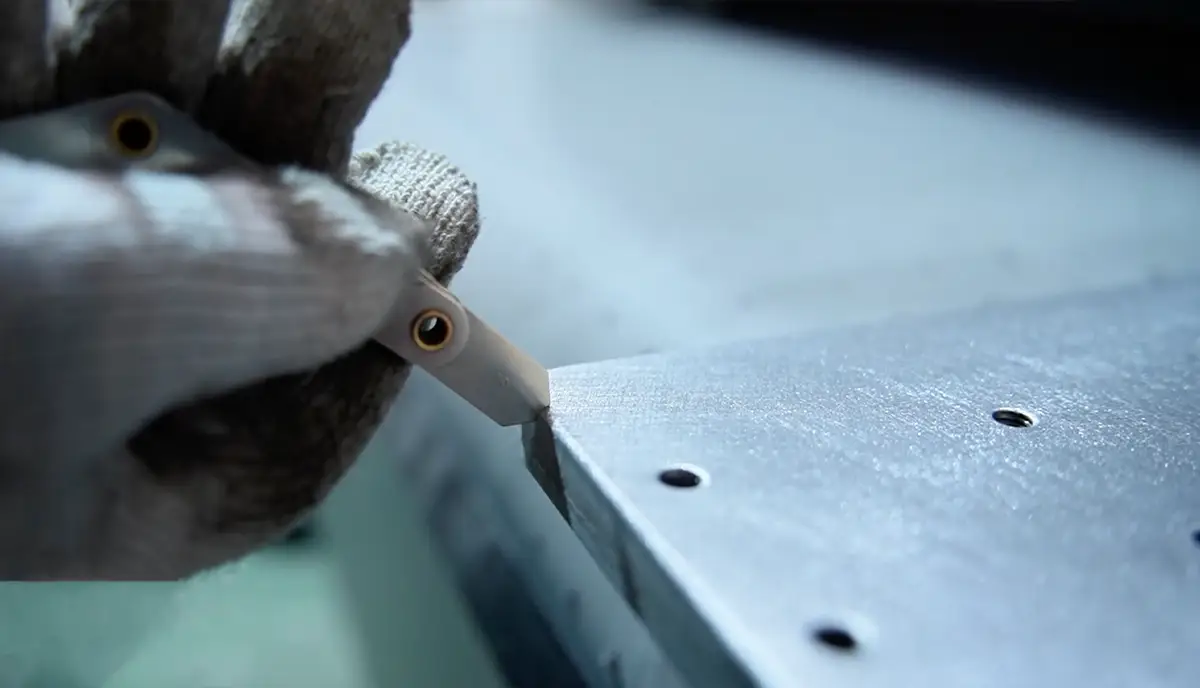
KTA calls a radius the optimum edge treatment, and it notes the catch: producing one carries considerable cost. With a hand grinder, a radius depends on the operator, the disc and the time of day. Internal holes and slots are often skipped.
Chamfer
A chamfer is faster by hand. On structural steel that is grit blasted anyway, a chamfer followed by blasting produces something close to a radius at lower cost. Sheet metal and laser-cut plate going to a powder line often skip blasting, and then the chamfer keeps its two sharper corners.
Stripe coat
Stripe coating adds an extra coat on edges, welds and similar areas, before or after the full coat. KTA's guidance is that it pays off most in immersion service, highly corrosive environments and complex geometries. It is labor on every part, every time, and it has to be inspected too.
One exception is worth knowing. A study for the National Steel Bridge Alliance found corner grinding unnecessary with inorganic zinc-rich primers at 83% or more zinc loading. If your system is one of those, follow the coating manufacturer, not this post.
A machine edge radius for coating on volume parts
For brackets, panels, guards and frames that run in batches and go to powder or wet paint, we think the economics point one way. Put the radius on the part once, with an automated deburring machine, and stop paying for it in stripe coating and rework.
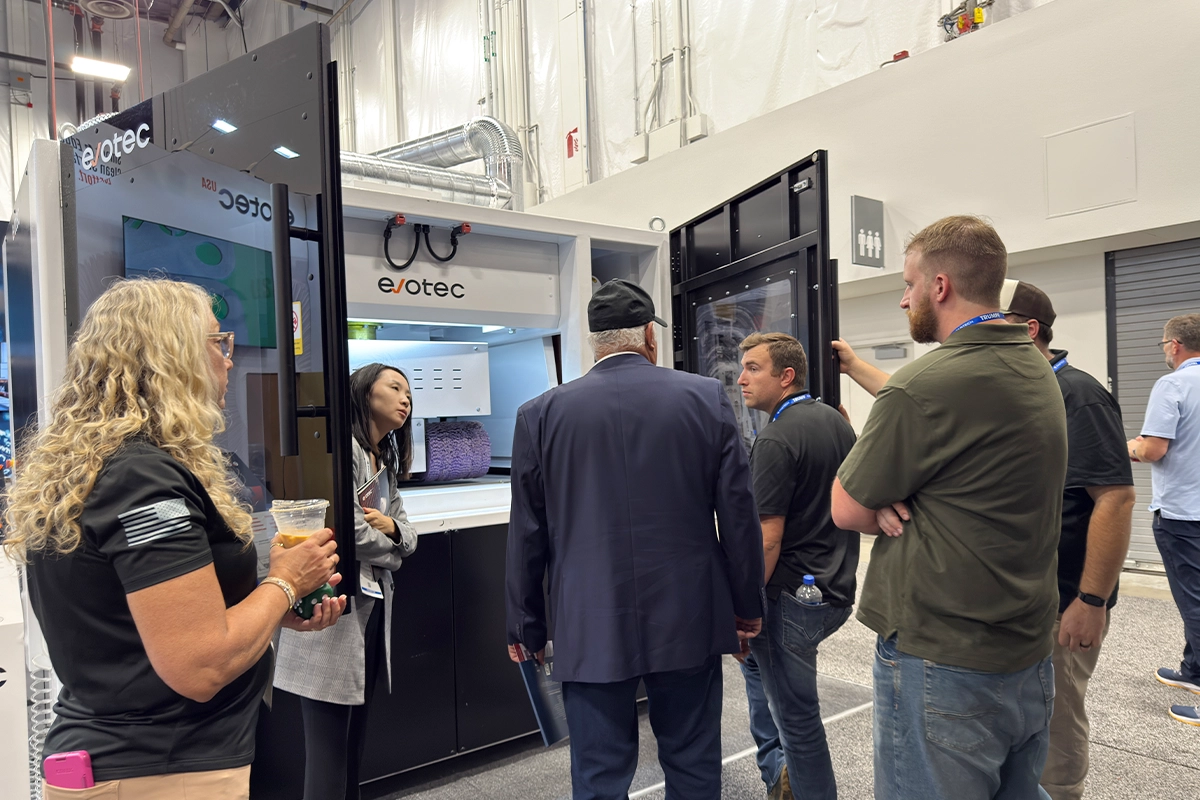
That only works if the machine reaches every edge. Our EdgeX SDR runs parts through a drum head that removes burrs and oxide, top brushes that work into holes, slots and internal contours, and rotary brushes that finish the external edge rounding, producing R2.5+ in one pass on parts from 50 × 50 mm (2" × 2") at 1–7 m/min. R2.5 clears the 1.6 mm minimum with margin. It processes one face per pass; for both sides, the Flipper add-on turns parts between two machines. The edge rounding machines overview compares which models reach which radius.
How to check the radius
A radius requirement means nothing without a way to check it. Keep the routine short:
- Use a radius gauge set that includes 1.6 mm (1/16") and the next size up, and check the external edge where the coating will see impact.
- Check at least one internal hole or slot edge on each part type. This is where hand finishing usually falls short.
- Record the radius per part type with the machine settings that produced it, so the next batch starts from a known setting.
- Recheck after abrasive or brush changes, since brush wear changes the radius.
If the drawing still says only "break all edges," ask the customer or the coating supplier for a number before you quote. That one question settles more coating disputes than any inspection after the fact. Our earlier post on edge rounding for spray painting covers the finish-quality side of the same problem.
Sources
- Preparation of Edges for Coating Performance, KTA-Tator
- Chipping Edges, Products Finishing
FAQs
Q1: What edge radius do coatings need?
It depends on the coating system and the spec. SSPC-PA 18 asks for at least a 1/16 in (1.6 mm) chamfer or radius on thermal-cut and sheared edges. Without a spec, larger radii build more film at the corner, so match the radius to the service environment and the coating supplier's advice.
Q2: Does SSPC-PA 18 require a full radius?
No. It accepts at least a 1/16 in (1.6 mm) chamfer or radius and states that a full radius is not required. It also asks for the hardened surface on thermal-cut edges to be removed before blasting.
Q3: Is a radius better than a chamfer for coating?
A radius holds film better because it has no secondary sharp corners. A chamfer is cheaper by hand and comes close to a radius if the part is grit blasted afterward. Parts that go to powder or wet paint without blasting keep the chamfer's corners.
Q4: What is edge retention?
Edge retention is the coating film thickness at the apex of a 90° edge divided by the film thickness on the flat surface. An average around 70% generally indicates an edge-retentive coating.
Q5: Can a machine round the edges of holes and slots?
Yes, if it has brushes that reach internal contours. On the EdgeX SDR, top brushes treat holes, slots and cutouts, and rotary brushes round the external edges in the same pass.
Next Steps
Our edge rounding machines page shows which configurations reach which radius, from light edge breaks to R2.5+.
If you are quoting coated work with an edge requirement, send us part drawings or sample parts with the spec. We will run them and report the radius we measure.