
Edge Rounding Machines for Sheet Metal Fabrication
Sharp edges are a downstream problem. They cause coatings to peel at corners, create handling injuries on the shop floor, and fail corrosion protection standards that require a minimum edge radius on the drawing.
Evotec builds edge rounding machines for fabricators processing stainless steel, carbon steel, aluminum, and brass — removing the sharp geometry left by laser cutting, punching, plasma cutting, and flame cutting, and replacing it with a controlled, consistent radius across every external edge, internal hole, and slot. While most Evotec deburring machines handle typical edge rounding tasks, EdgeX is the only model validated to R2.5+ — the standard required for powder coating, galvanizing, and OEM coating audit compliance.
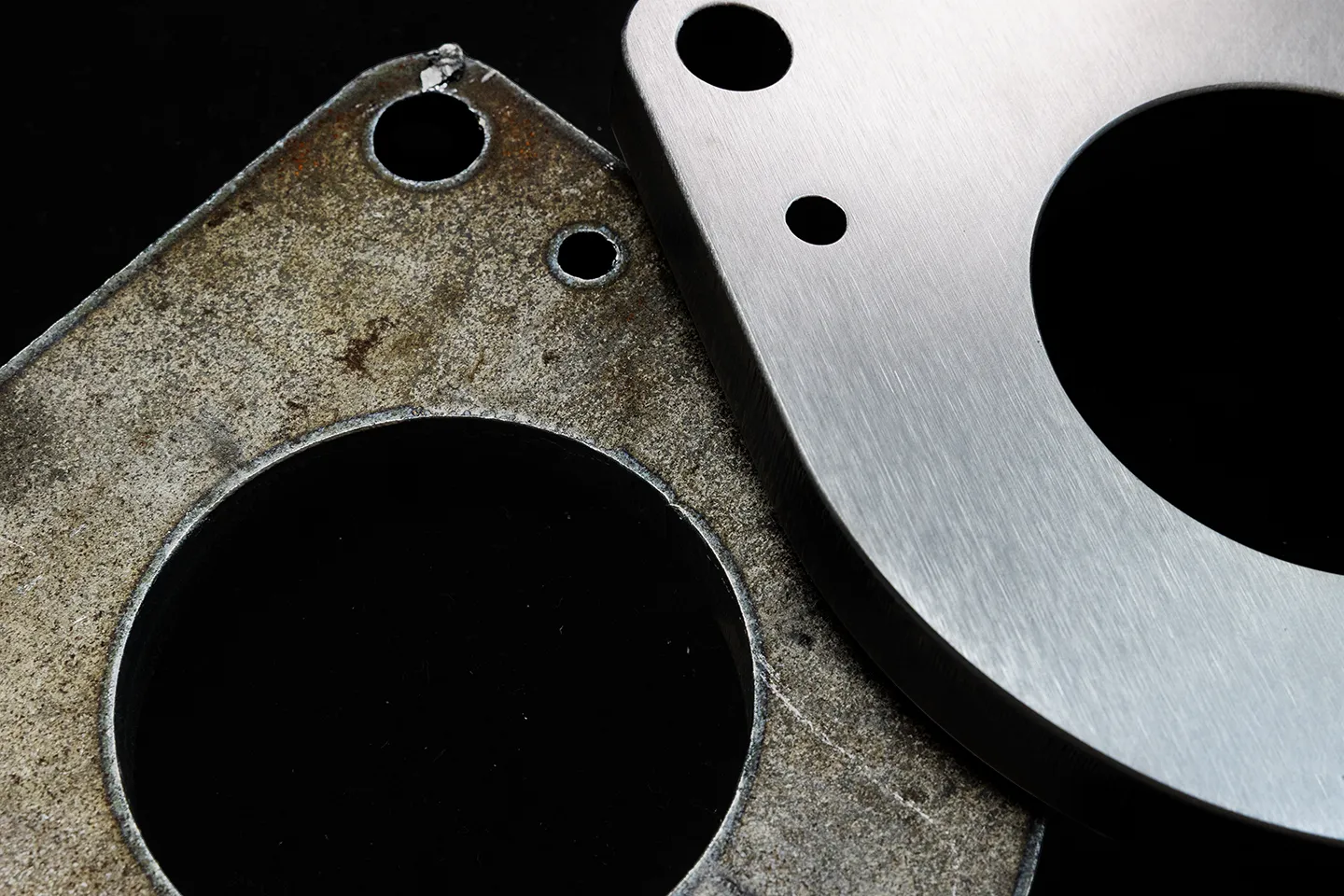
Edge Rounding vs. Deburring — Not the Same Process
Both operations can run on the same machine in sequence. But they address different problems, require different parameters, and produce different results. Fabricators who need edge rounding because a coating spec or OEM drawing says so need both — deburring first, then rounding to the specified radius.
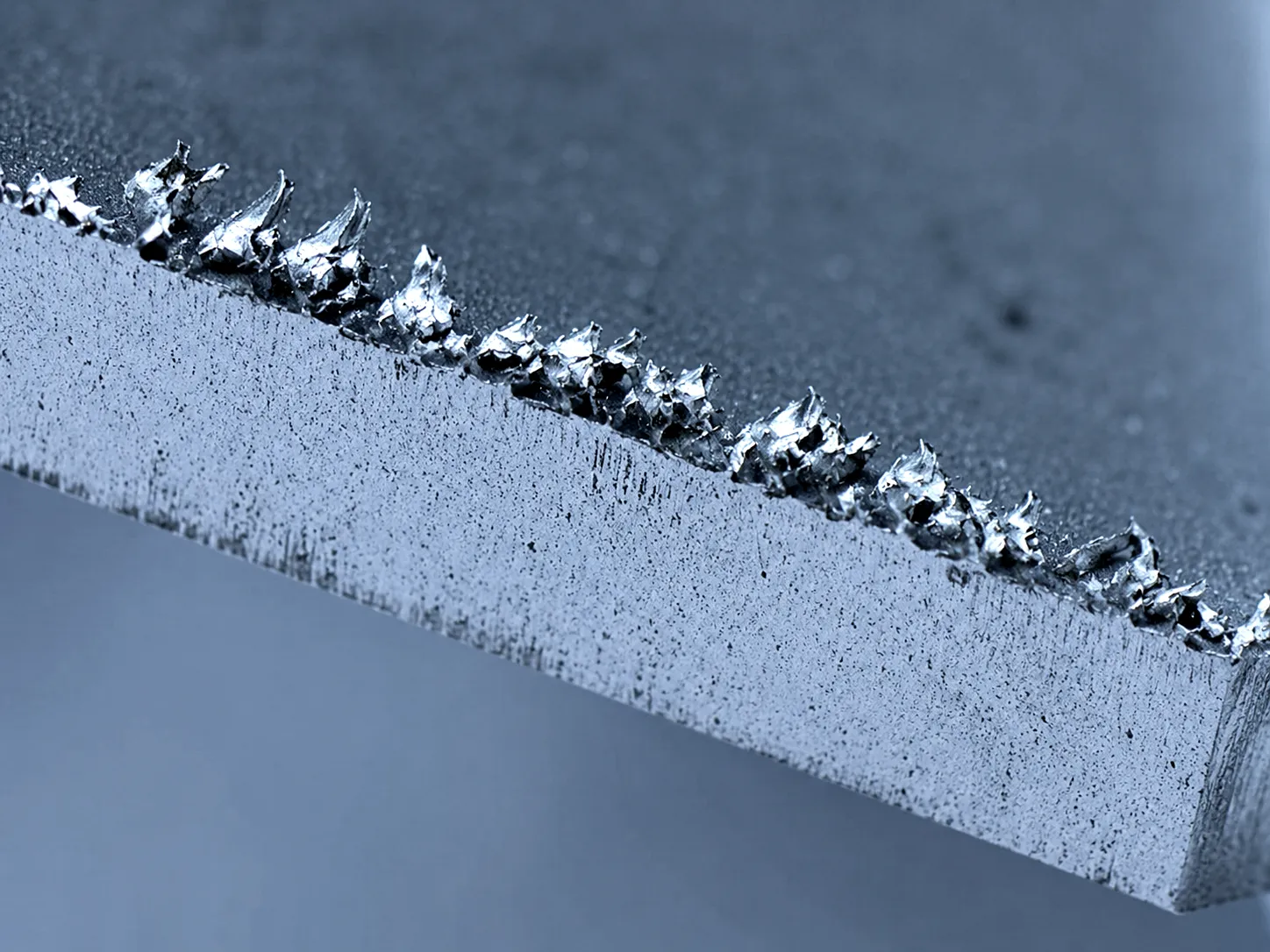
Deburring
Deburring removes the raised metal protrusions left by cutting — burrs along the cut face, slag on the underside of plasma-cut plate. The result is a flat, clean edge.
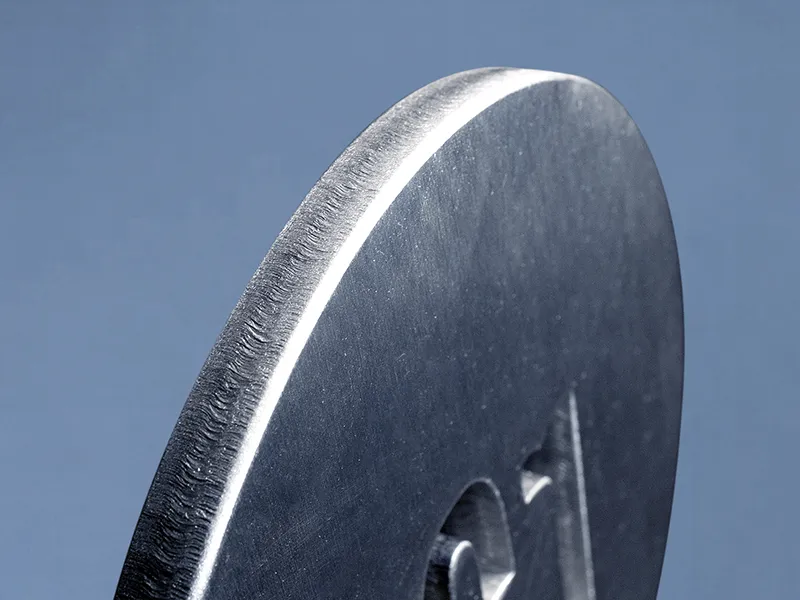
Edge rounding
Edge rounding grinds the sharp corner geometry into a controlled arc with a defined radius. A deburred edge is safe to handle. An edge-rounded part has a radius — R0.3, R0.5, R1.0, R2.5+ — that is measurable, repeatable, and specified.
Why the Radius Matters for Coating
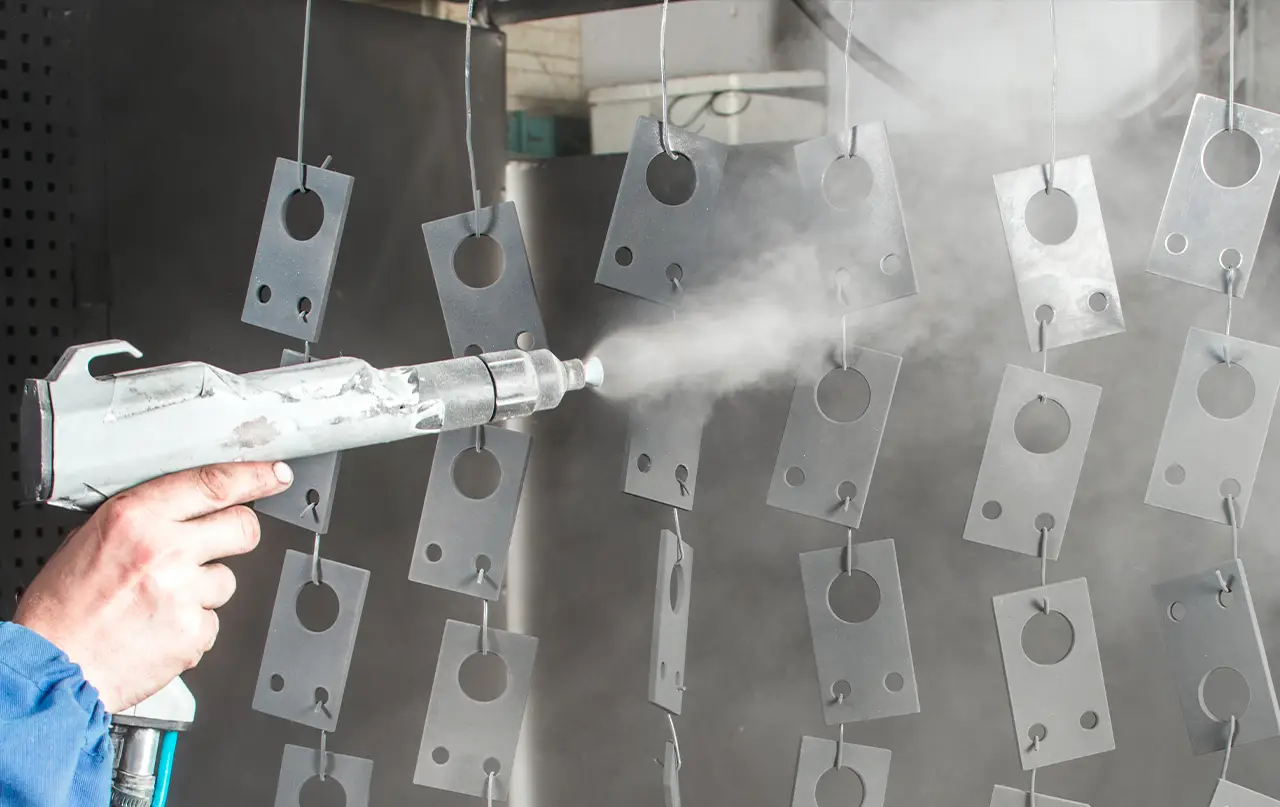
Liquid coatings and powder coatings behave predictably on flat surfaces. At a sharp corner, surface tension pulls the coating back — the film thins at the apex and coating adhesion fails at the edge first. This is where rust initiates and where coating audits fail.
A rounded edge gives the coating a surface it can hold. The larger the radius, the more coating builds at the corner and the better the corrosion protection. DIN EN 1090, a common structural steel fabrication standard, requires a minimum 2 mm edge radius for corrosion-critical components. Agricultural machinery, outdoor equipment, and galvanized parts commonly specify R2.0–R2.5+.
Standard Edge Rounding vs. R2.5+ Class
Not every application needs a large radius. The distinction matters for machine selection. If your parts need a specified radius on the drawing, EdgeX is the answer. If your parts need safe, consistent edges for general handling and coating prep, any Evotec machine with Rotary Brushes delivers that as part of a standard deburring pass.

Standard edge rounding (up to R1.0)
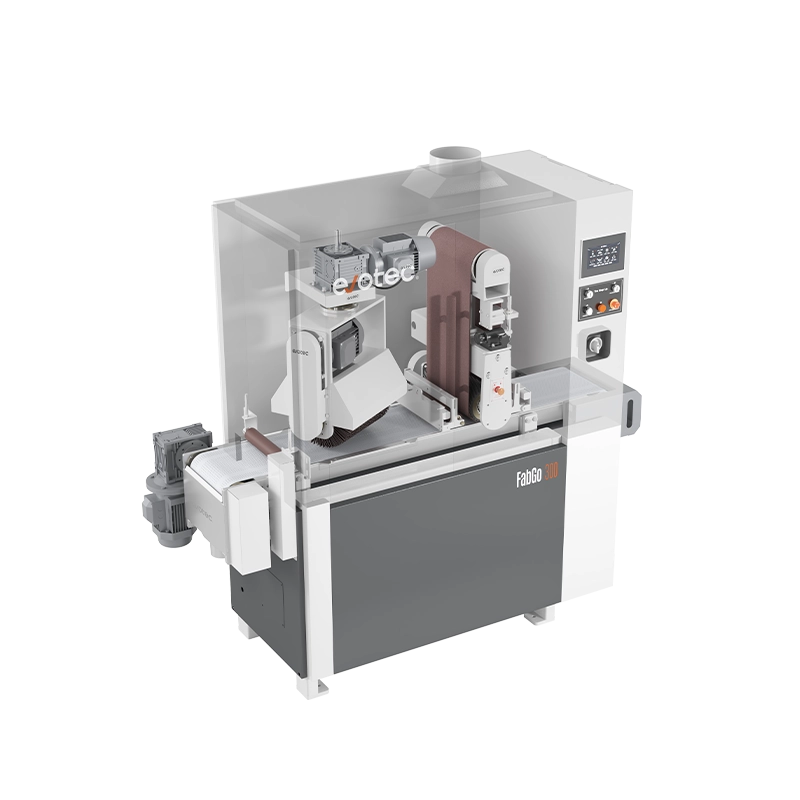
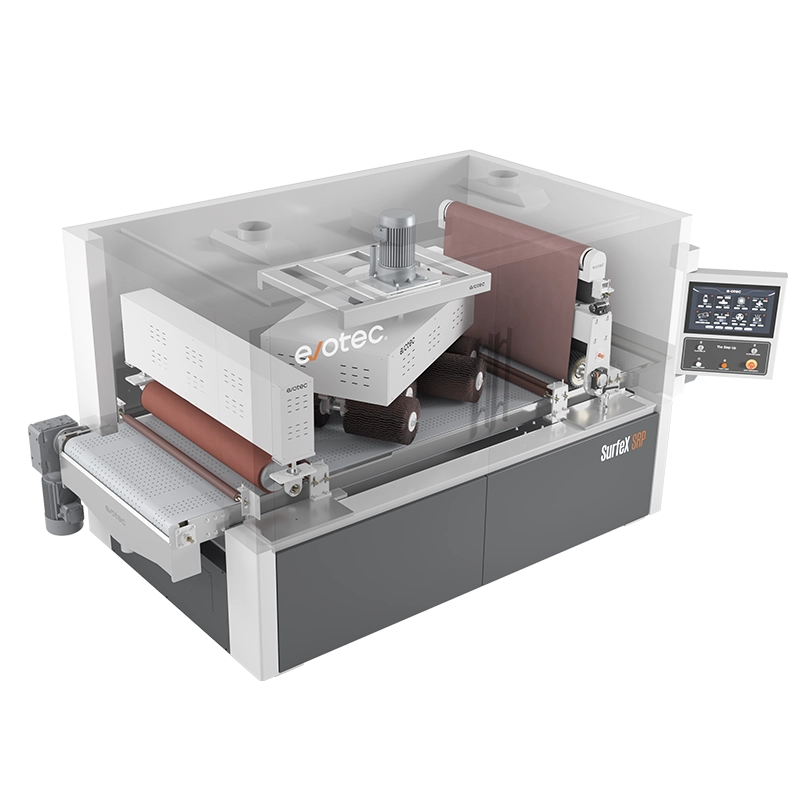
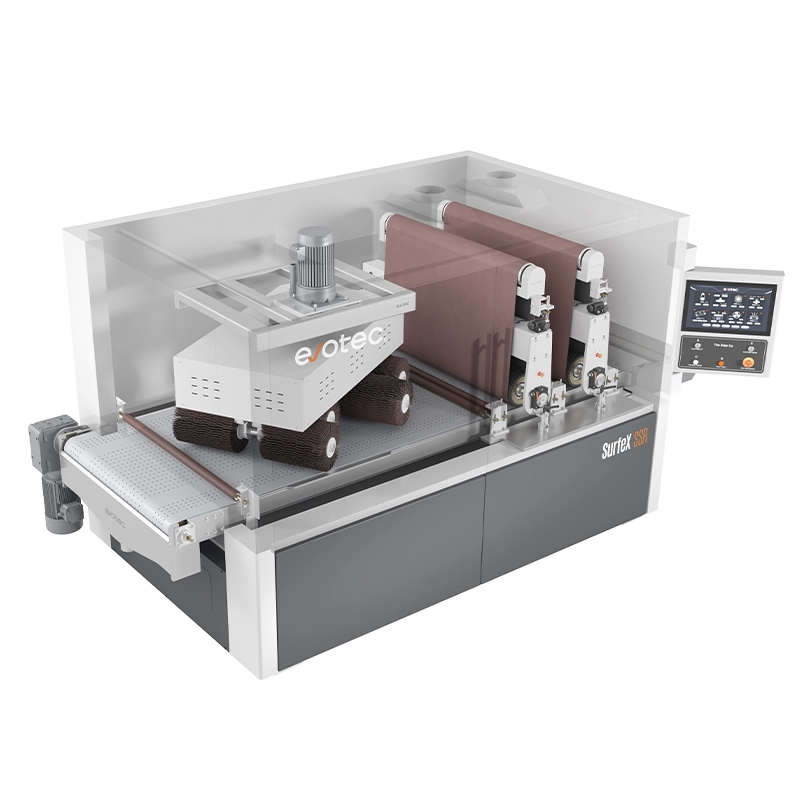
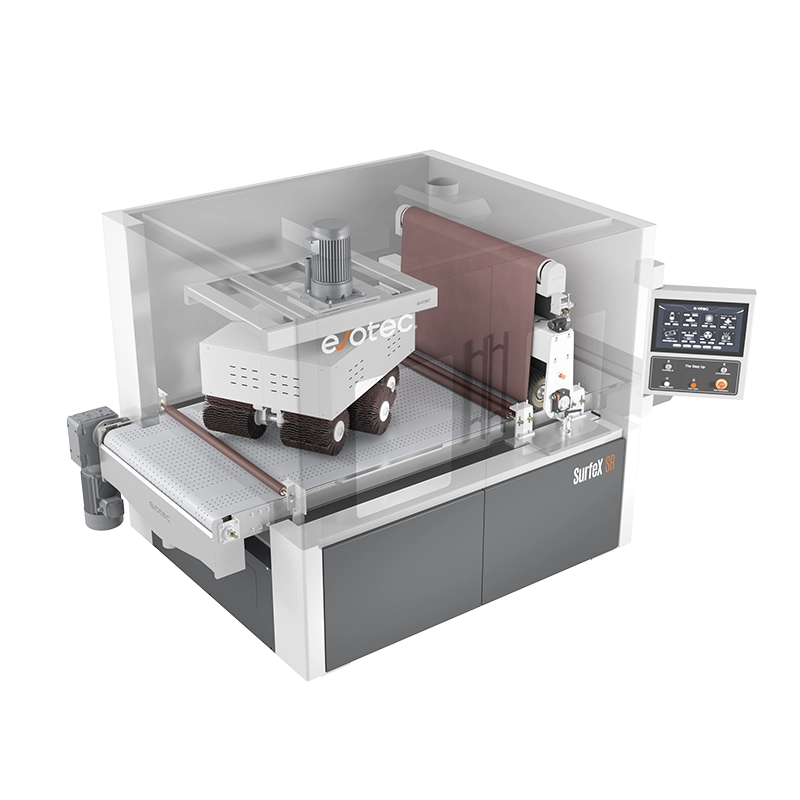
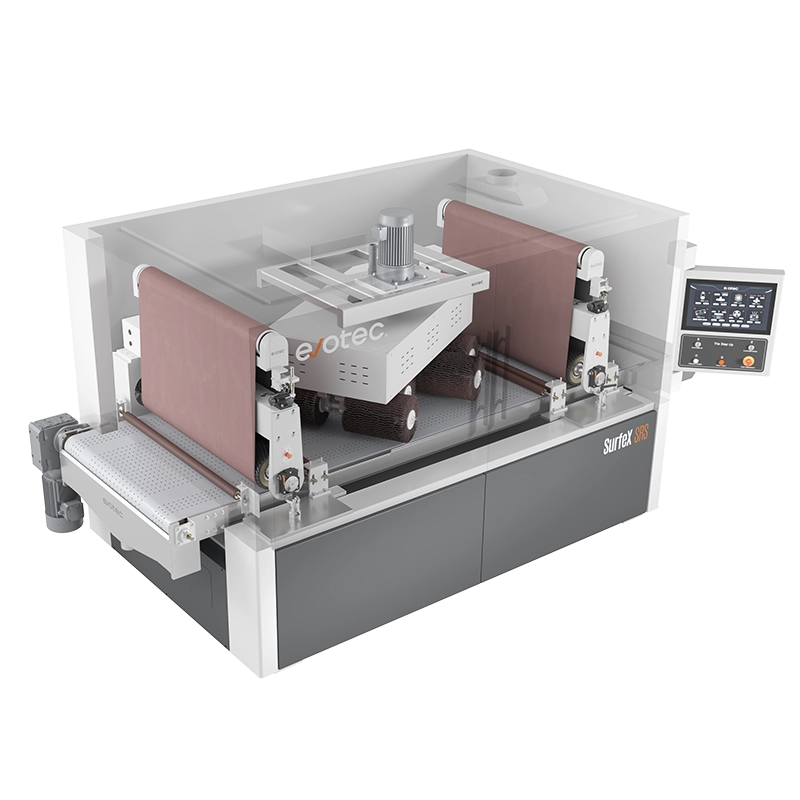
removes the sharpness from laser-cut and punched parts, improves safety for handling and assembly, and prepares parts for general coating applications. Any Evotec machine equipped with Rotary Brushes delivers this as part of a standard deburring pass. SurfeX SR, SSR, SRS, SRP, and FabGo 300 all include Rotary Brush stations.
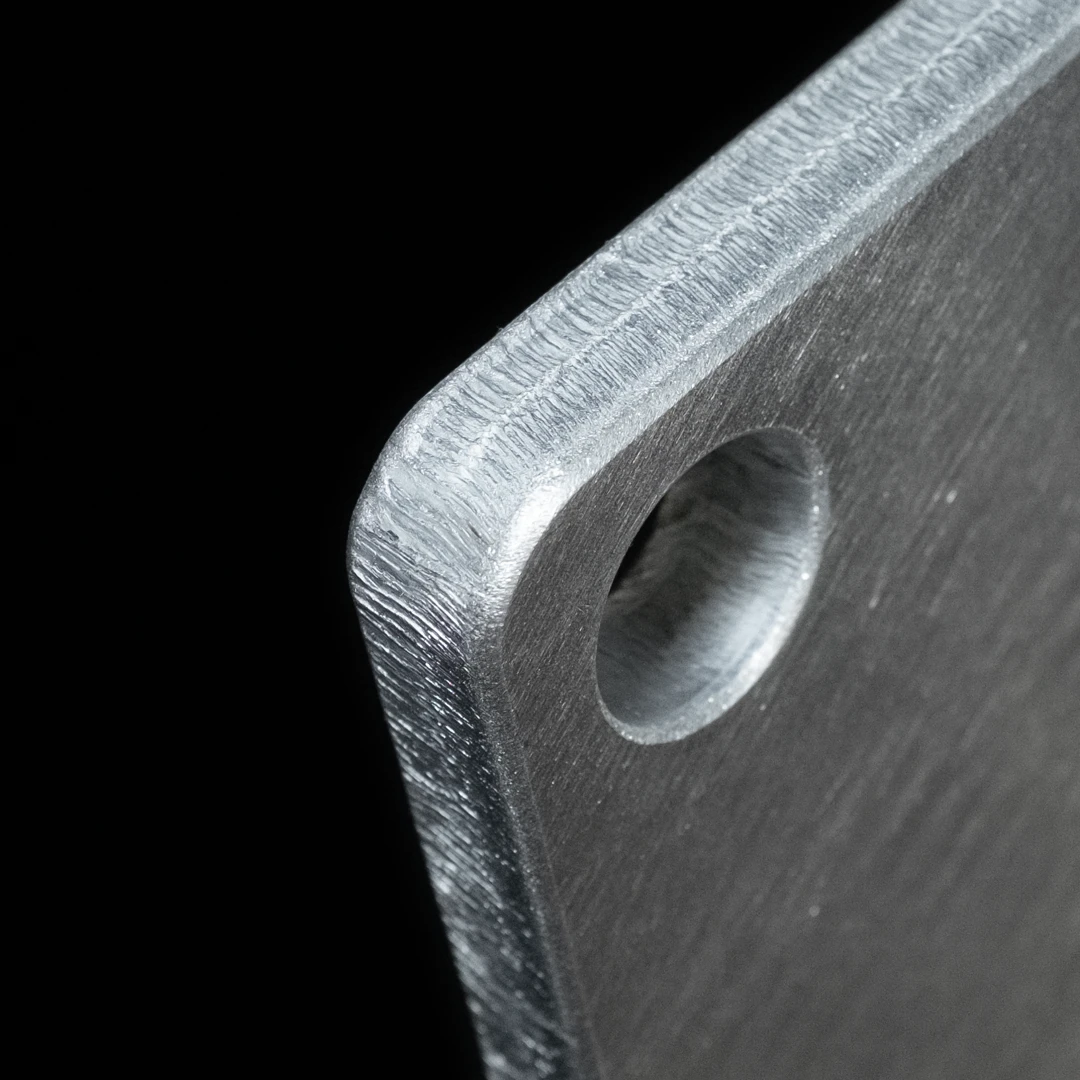
R2.5+ class edge rounding
produces a defined, verifiable large radius on all external edges and internal features. Required for powder coating specifications, OEM coating audit standards, galvanizing, and compliance with DIN EN 1090 and similar standards. This is the EdgeX's specific capability — and it is the only Evotec model validated to achieve it.
EdgeX — Purpose-Built for R2.5+ Edge Rounding
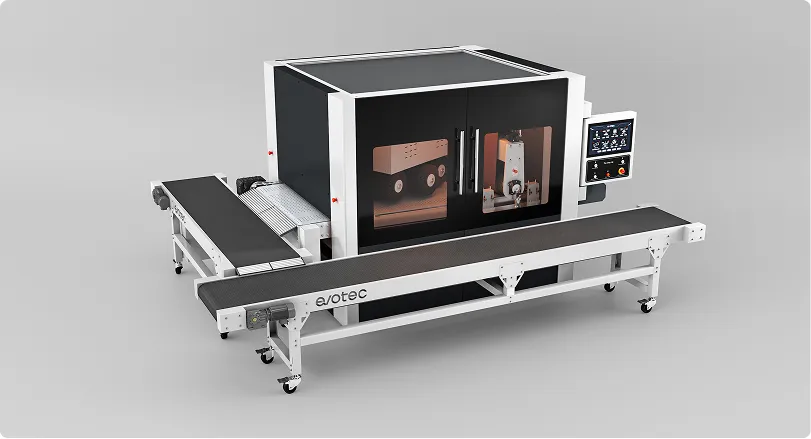
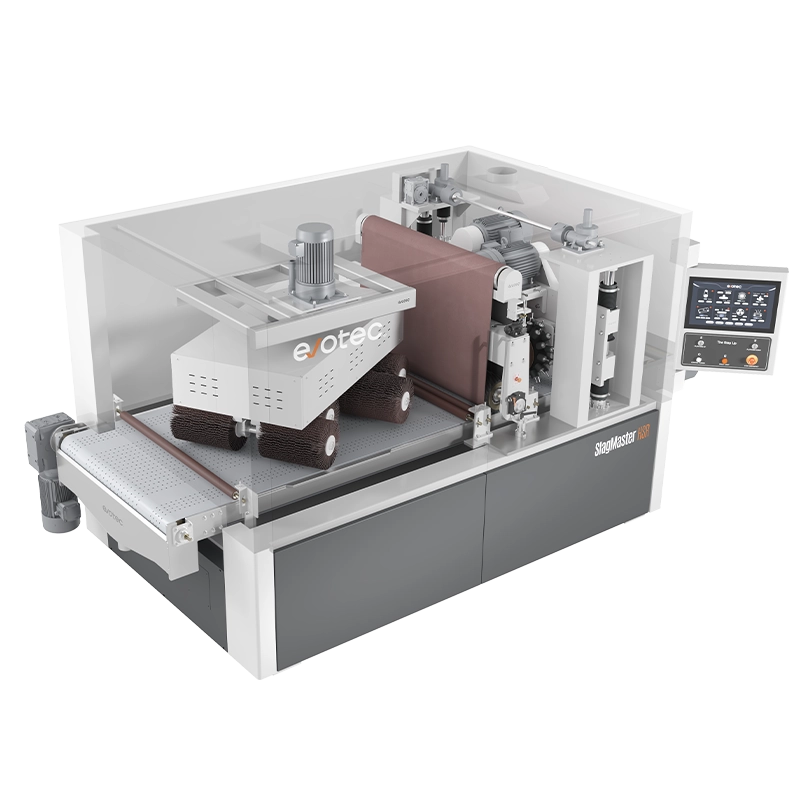
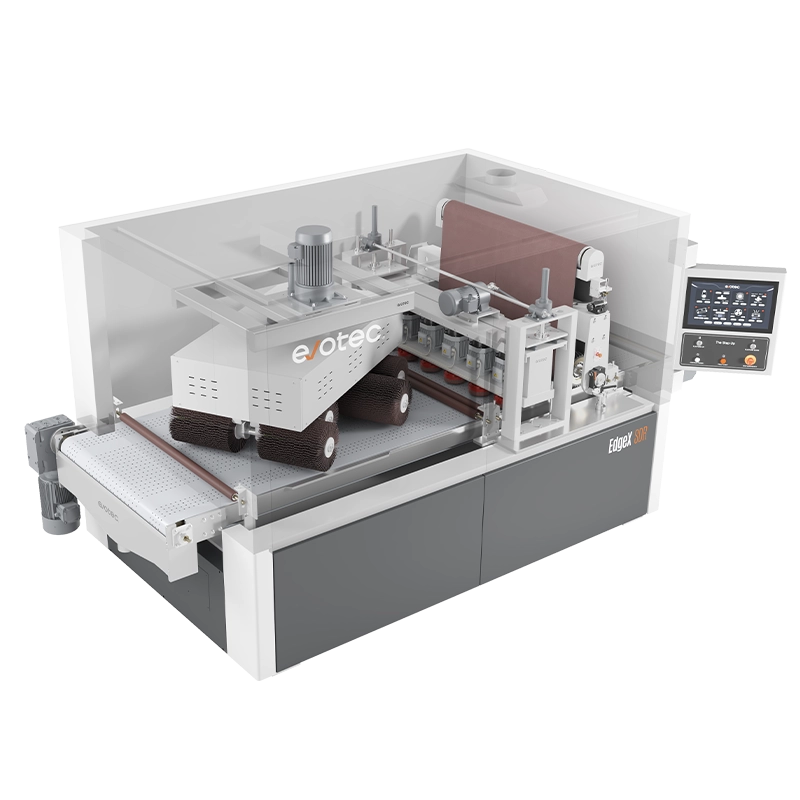
EdgeX is built for fabricators whose parts carry a defined edge radius requirement — on the drawing, in the coating spec, or in the OEM audit checklist. It processes deburring, internal feature chamfering, and R2.5+ edge rounding in a single conveyor pass through three dedicated stations.
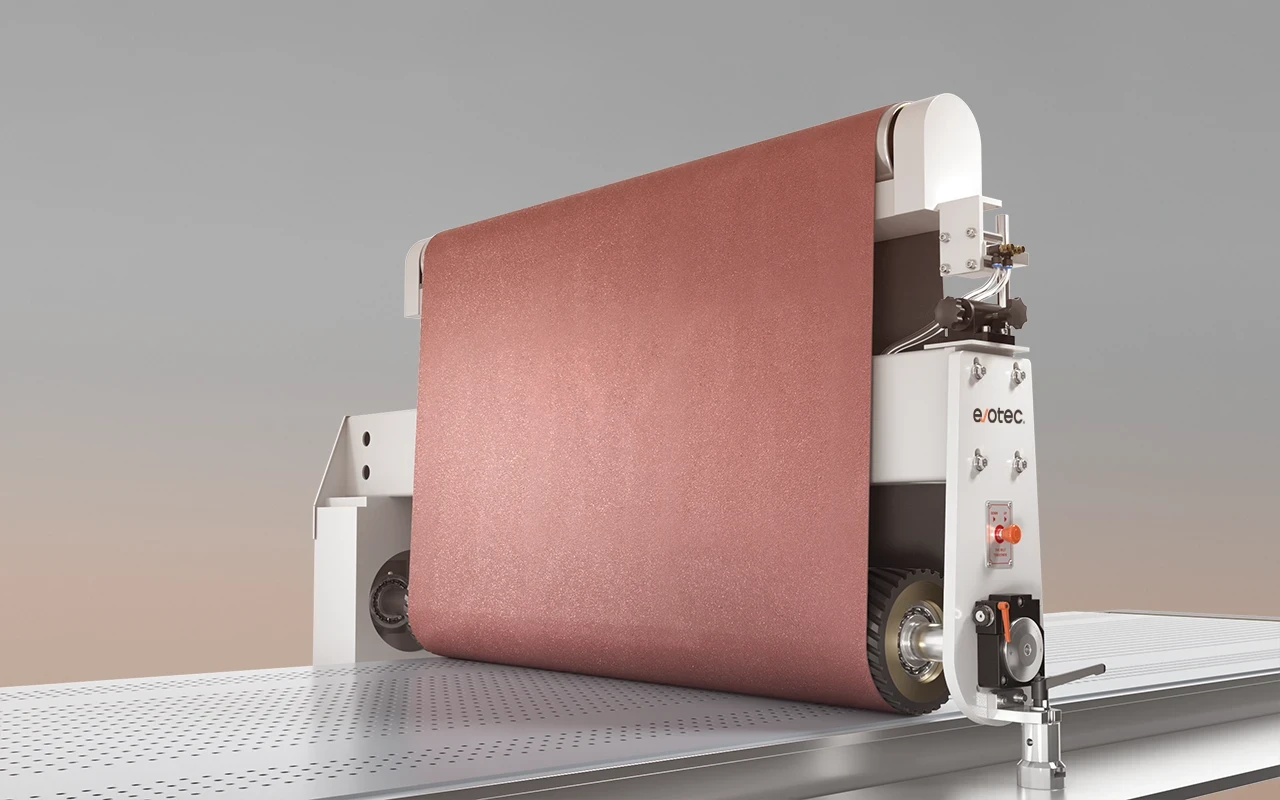
Drum Head
Drum Head removes burrs, oxide, and surface defects left by laser cutting, punching, and general sheet metal processing. Prepares the part surface before edge rounding begins.

Top Brushes
Top Brushes extend downward into holes, slots, rectangular cutouts, and complex internal contours. Internal edges reach the same radius standard as external edges. This is what separates EdgeX from machines that round external edges only — parts with bolt holes, ventilation slots, or mounting cutouts get full internal chamfering in the same pass.
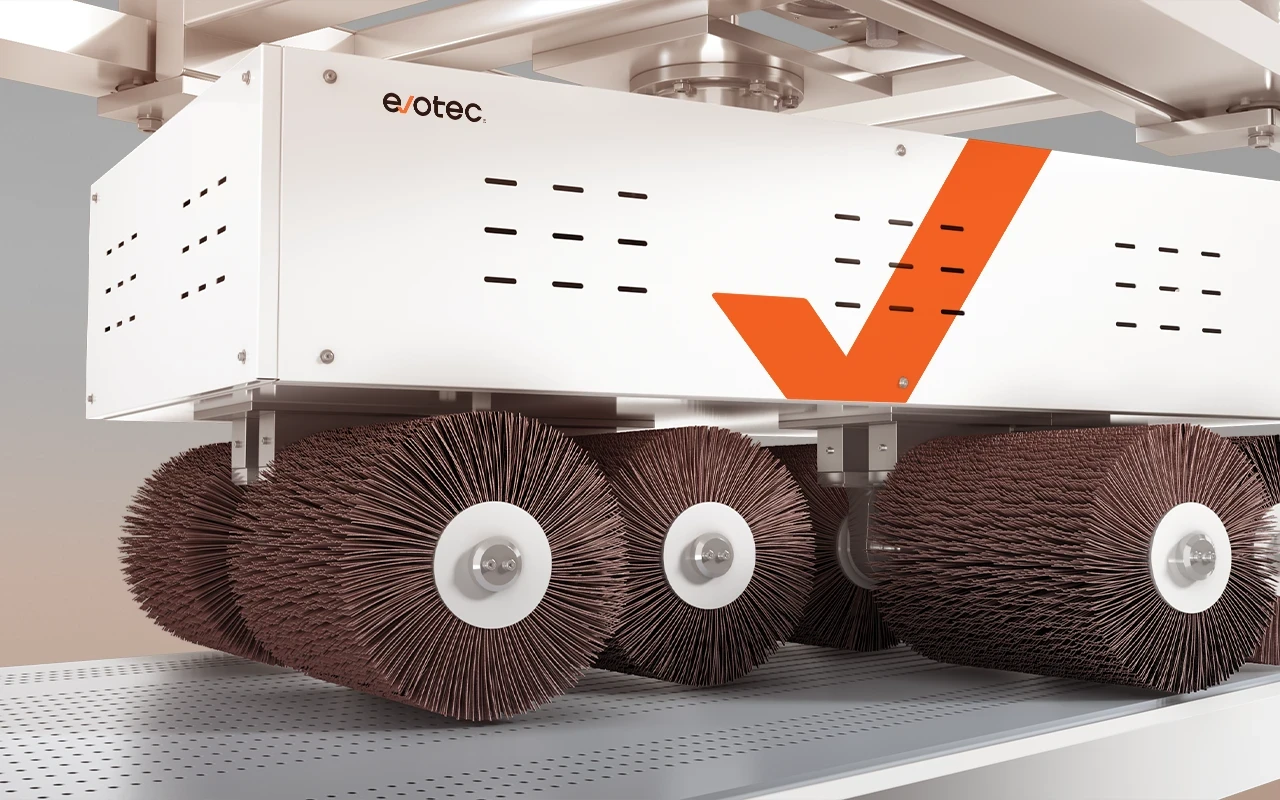
Rotary Brushes
Rotary Brushes apply consistent radial pressure to all external edges, producing a controlled corner radius. Brush count, belt speed, and contact pressure are set per part type and stored in EvoTrack for recall at changeover.
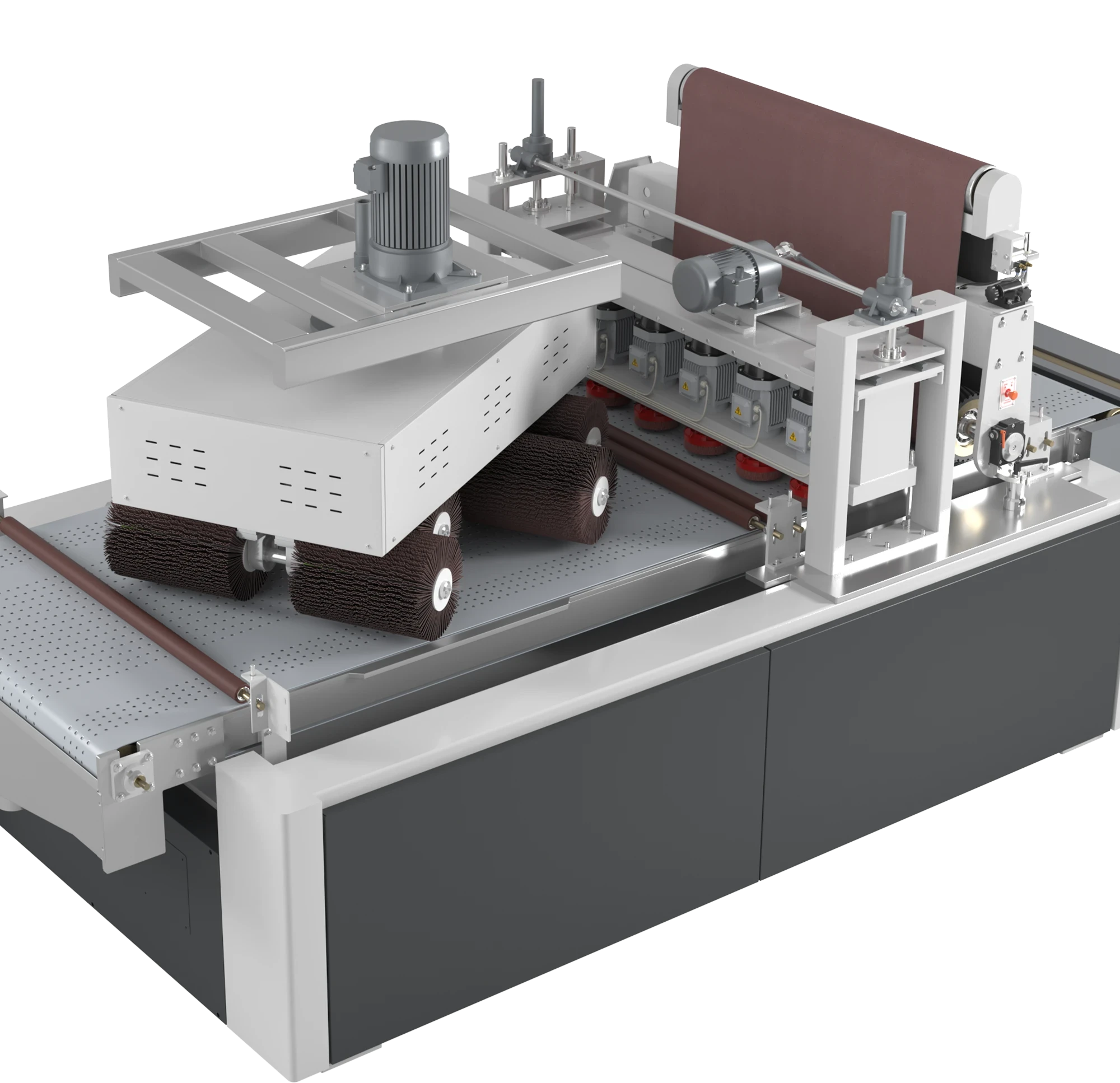
EdgeX is Validated to Achieve R2.5+ Edge Rounding.
EdgeX is the only Evotec model validated to achieve R2.5+ edge rounding. This meets the edge radius requirements specified for:
Powder coating and wet paint applications with film build requirements at corners
Galvanizing, where zinc adhesion on sharp corners is the primary failure point
Agricultural and outdoor equipment with corrosion protection standards
OEM PPAP and coating audit requirements specifying a minimum corner radius
DIN EN 1090 and equivalent structural fabrication standards
EdgeX Technical Specifications
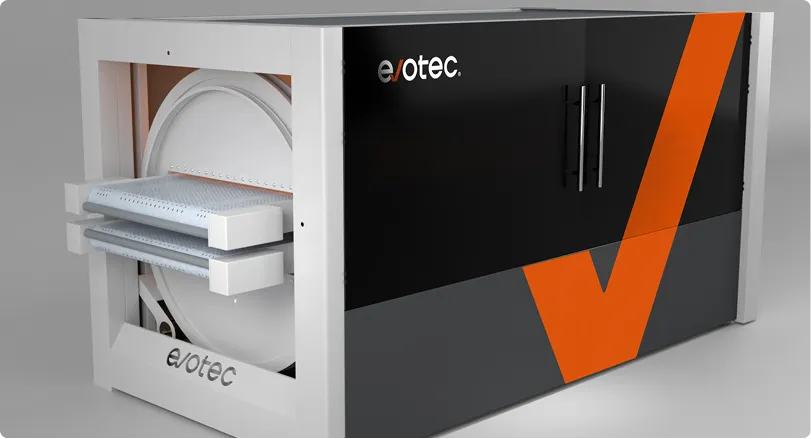
Double-Sided Edge Rounding
EdgeX processes one face per pass. For parts that require edge rounding on both faces, three approaches are available:

Edge Rounding by Material

Carbon Steel
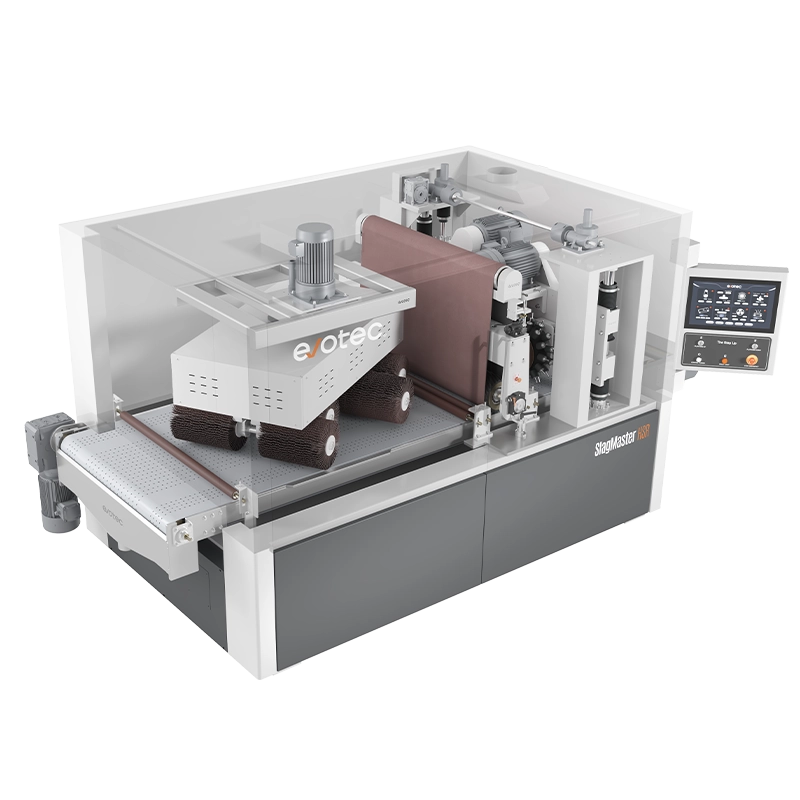
The most common application. EdgeX removes laser-cut burrs and oxide in the Drum Head station, then rounds all external and internal edges to R2.5+ through the Top Brush and Rotary Brush stations. Plasma and flame-cut carbon steel thick plate with heavy slag requires SlagMaster HSR for slag removal before edge rounding — the two machines can be positioned in sequence on the same line.

Stainless Steel
Stainless steel edge rounding requires heat management. The material conducts heat poorly — grinding localizes temperature at the contact point, which damages the passive layer and causes heat tint discoloration. Belt speed and contact pressure on EdgeX are set to prevent overheating while achieving the specified radius.
Abrasive selection also matters. Belts used on carbon steel carry embedded particles that become corrosion initiation points on stainless. EvoGrit 3.0 includes stainless-specific abrasive variants to prevent cross-contamination.
Aluminum
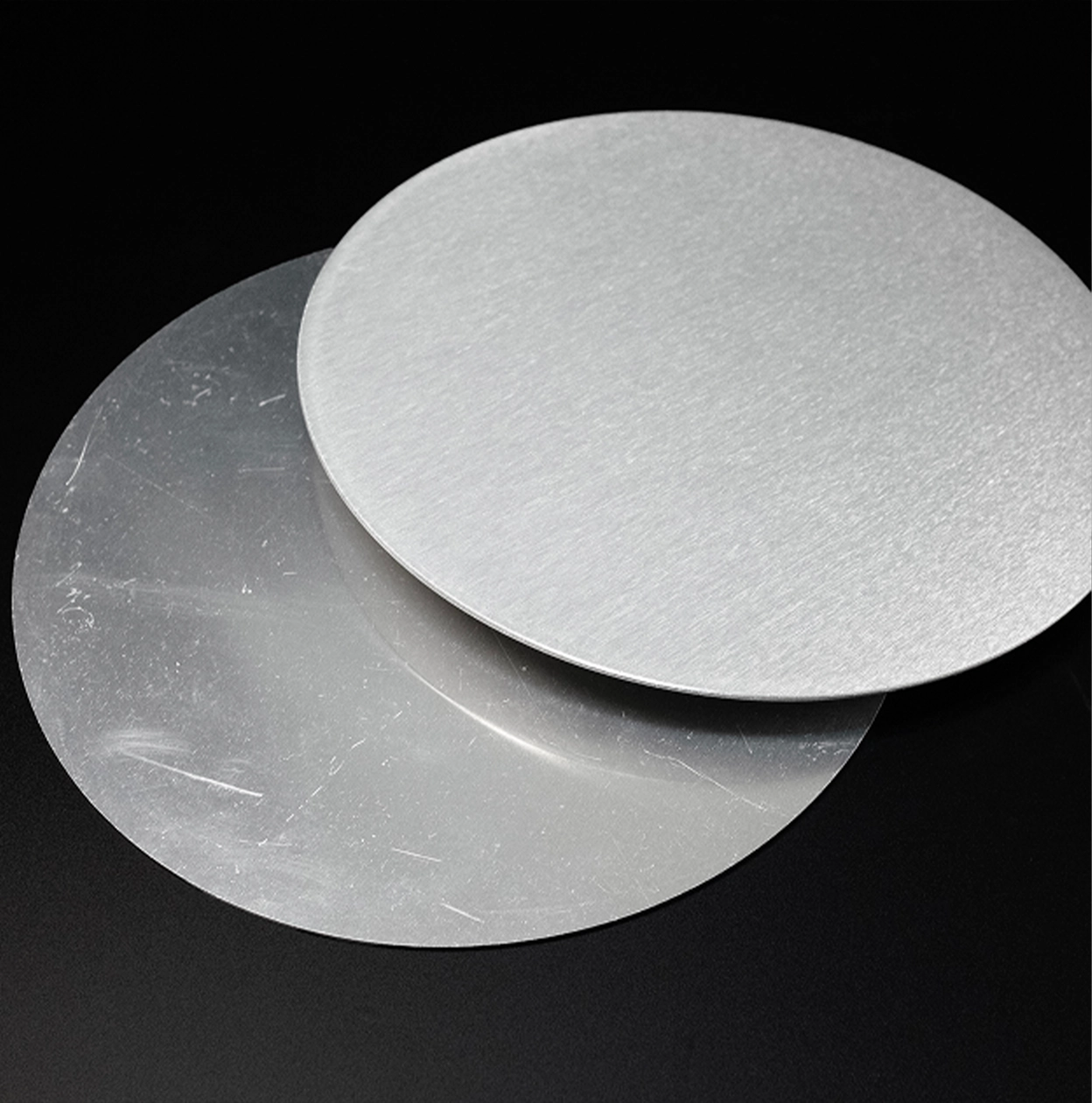
Aluminum requires lower contact pressure than steel to avoid surface deformation. Grinding debris is adhesive and loads abrasive belt surfaces faster than steel swarf. EdgeX handles aluminum edge rounding with aluminum-specific abrasive configurations and adjusted pressure settings. Wet dust extraction (Hydro Dust 2.0) is recommended for aluminum processing.

Brass and Cold Plate
Brass processes at similar low-pressure settings to aluminum. Dedicated abrasive selection applies.
Internal Feature Chamfering — Where Most Machines Stop
Standard edge rounding machines process external part edges — the perimeter of the cut shape. Parts with holes, slots, and internal cutouts present a different problem: internal edges are just as sharp as external edges, just as likely to cause coating failure, and often harder to reach. EdgeX SDR's Top Brushes extend downward into internal features during the conveyor pass. Bolt holes, rectangular slots, ventilation cutouts, mounting holes — internal edges are chamfered to the same radius standard as external edges, without a separate operation or manual rework step.
For fabricators supplying parts to OEM coating audits, this matters. An internal edge that fails the radius check requires rework. A part that passes internal and external radius requirements in a single automated pass does not.
Note: machines without Top Brushes have limited capability on internal edges. However, any Evotec machine equipped with Rotary Brushes remains well suited for standard external edge rounding.

EvoTrack — Parameter Recall for High-Mix Production
Edge rounding parameters — belt speed, contact pressure, brush configuration — vary by material type, part thickness, and specified radius. In a shop processing multiple part types across a shift, manually re-setting parameters at each changeover adds time and introduces inconsistency.
EvoTrack stores complete parameter sets per part type. Operators select the stored recipe at changeover. No manual re-setup. No variation between operators. The radius on the first part of the new batch matches the radius on the last part of the previous one.

FAQs
Deburring removes raised metal protrusions — burrs, slag, and rough material along the cut edge — leaving the edge flat. Edge rounding removes the sharp corner geometry itself, grinding it into a controlled arc with a defined radius. Deburring is about surface cleanliness. Edge rounding is about corner geometry. Both operations typically run in sequence on the same machine.
EdgeX SDR is validated to R2.5+. This is the highest edge rounding standard in the Evotec range and exceeds the R2.0 mm minimum required by DIN EN 1090 for corrosion-critical structural components. For general coating prep and safety, radii from R0.3 are achievable on any Evotec machine equipped with Rotary Brushes.
On EdgeX SDR, yes. The Top Brushes (disc brush) station extends into holes, slots, and internal cutouts during the conveyor pass, chamfering internal edges to the same radius standard as external edges. Machines without Top Brushes have limited capability on internal edges — however, machines equipped with Rotary Brushes are still well suited for standard edge rounding on external edges.
Stainless steel, carbon steel, aluminum, brass, and cold plate. Material-specific abrasive configurations apply for stainless steel and aluminum.
Coatings thin at sharp corners due to surface tension — the coating film pulls back from the apex and builds less thickness at the edge. A rounded corner allows coating to build to full film thickness across the geometry, improving adhesion, corrosion protection, and first-pass yield in coating audits. The larger the radius, the more consistent the coating build at the edge.
Yes — the Drum Head handles burr and oxide removal, and the brush stations complete edge rounding. Plasma and flame-cut parts with heavy slag can also be processed on EdgeX SDR. However, if heavy slag is severe and frequent, pre-treatment before edge rounding is recommended. A separate SlagMaster HSR is not required — Evotec can configure a custom four-station machine with the Slag Hammer as the first station, followed by three standard processing stations for deburring and R2.5+ edge rounding, completing everything in a single conveyor pass.
Any other questions?
No questions are too big or small — send us your questions and we will get back to you as soon as possible.
Evotec's Edge-Rounding Machines
All Evotec deburring machines equipped with a Rotary Brush set — whether a single brush or multiple — deliver edge rounding capability alongside deburring and surface finishing. For applications requiring a defined, verifiable radius up to R2.5+, EdgeX SDR is the dedicated solution.

Get a Configuration Recommendation.
Working width, material, part geometry, and specified edge radius determine the right configuration. Submit your part details and Evotec's engineering team will return a specific recommendation. Parts and drawings can also be sent for test processing — radius results are returned before any purchase decision is required.
