Laser Oxide Removal Before Powder Coating: Pickle or Grind?
For fabricators and coating-line managers whose powder coat chips at the edges of oxygen-cut carbon steel parts. This post compares acid pickling with mechanical oxide removal, explains what each takes to run, and shows how part geometry decides between them.

Key Takeaways
- Oxygen-assist laser cutting leaves a thin, hard oxide on carbon steel edges that standard pretreatment cleaners do not remove.
- Phosphate does not form on that oxide, so powder bonds to scale instead of steel and chips at the edge.
- Acid pickling works, but it adds heated stages, bath monitoring, a neutralizing rinse and acid waste to the wash line.
- Mechanical removal before the wash takes off the scale and rounds the edge in the same pass, which a pickle stage cannot do.
- Flat parts suit mechanical removal; formed parts and intricate cut profiles are where pickling still earns its place.
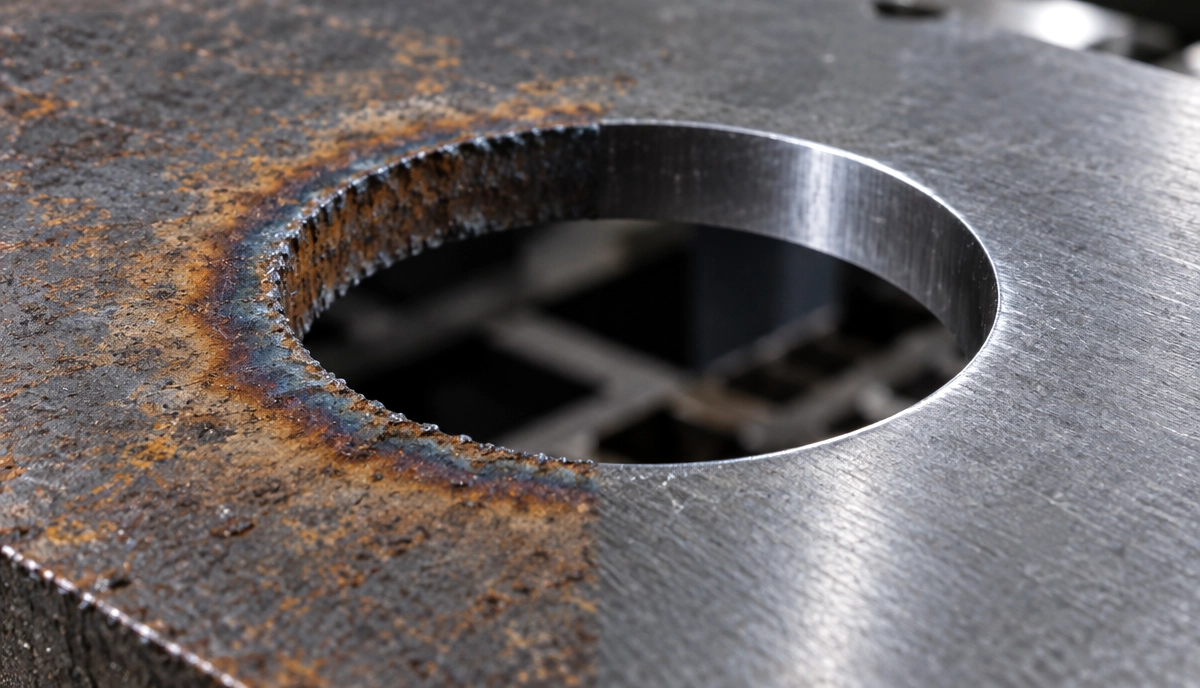
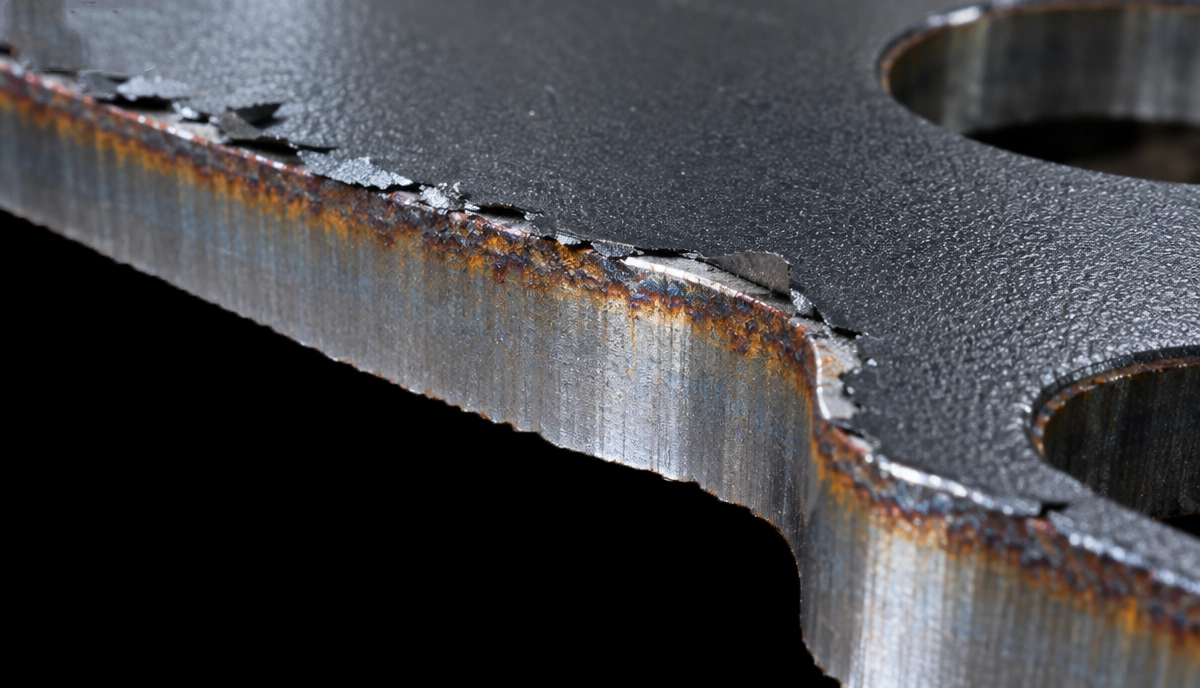
Powder coat that flakes off the edge of a laser-cut carbon steel bracket is rarely a powder problem. When parts are cut with oxygen assist, every cut face carries a thin, hard layer of iron oxide, and standard pretreatment cleaners leave it in place. The conversion coating never forms on it, so the powder bonds to scale instead of steel and lets go at the first knock. Laser oxide removal is the fix, and there are two honest ways to do it: dissolve the scale with acid in the wash line, or take it off mechanically before the parts get there.
Our position: for flat laser-cut parts going to a powder line, mechanical removal combined with edge rounding in the same pass is the better default. Pickling still has a place, but on a narrower set of parts than most shops assume.
Why laser scale breaks powder coat adhesion
Oxygen is the usual assist gas for thicker carbon steel, and the price is an oxide skin on every cut edge. A long-running Products Finishing Q&A on chipping edges describes the mechanism plainly. The layer is thin and hard, typical cleaners do not remove it, and phosphate will not grow on it. E-coat shows the defect less. Powder shows it more, and the chips appear exactly where parts get handled, stacked and bolted.
Cutting with nitrogen avoids most of the oxide. The Fabricator's technical piece on avoiding deburring at the laser explains how focus position, assist gas and cutting speed decide how clean an edge leaves the table. Nitrogen is not practical for every thickness and gas budget, though, so many shops keep oxygen for thicker carbon steel and deal with the scale downstream. That downstream step is the decision this post is about.
Option one: pickle the scale in the pretreatment line
Acid pickling adds one or more stages ahead of the phosphate or thin-film pretreatment. A Products Finishing technical article on solving adhesion issues from laser cuts sets out what that stage takes to run well:
- Concentration has a ceiling. Scale removal stops improving much past about 20% acid concentration, so a stronger bath mostly costs more.
- Heat and agitation do the work. Removal rate climbs steeply with bath temperature, which means heating energy and fume control.
- The bath wears out. A typical prepaint pickle is often treated as spent at around 5–10 g/L of dissolved ferrous iron, though this varies by process.
- The rinse matters. A neutralizing rinse held at roughly pH 8–9 keeps freshly pickled steel from flash rusting before the next stage.
- The hardware is specific. Tanks and heating surfaces are usually 316L stainless steel, with polymer piping and fluoropolymer seals.
Acid choice is its own trade-off. Phosphoric acid was the traditional pick, but tighter limits on phosphorus discharge have pushed lines toward sulfuric or organic acids. Sulfuric can leave steel prone to rusting in the rinse. Organic acids can complicate precipitation waste treatment.
None of this rules pickling out. It means the real cost includes chemistry, heat, waste handling, extra tank length on the line, and the bath monitoring that keeps it all in range.
Option two: mechanical laser oxide removal before the wash
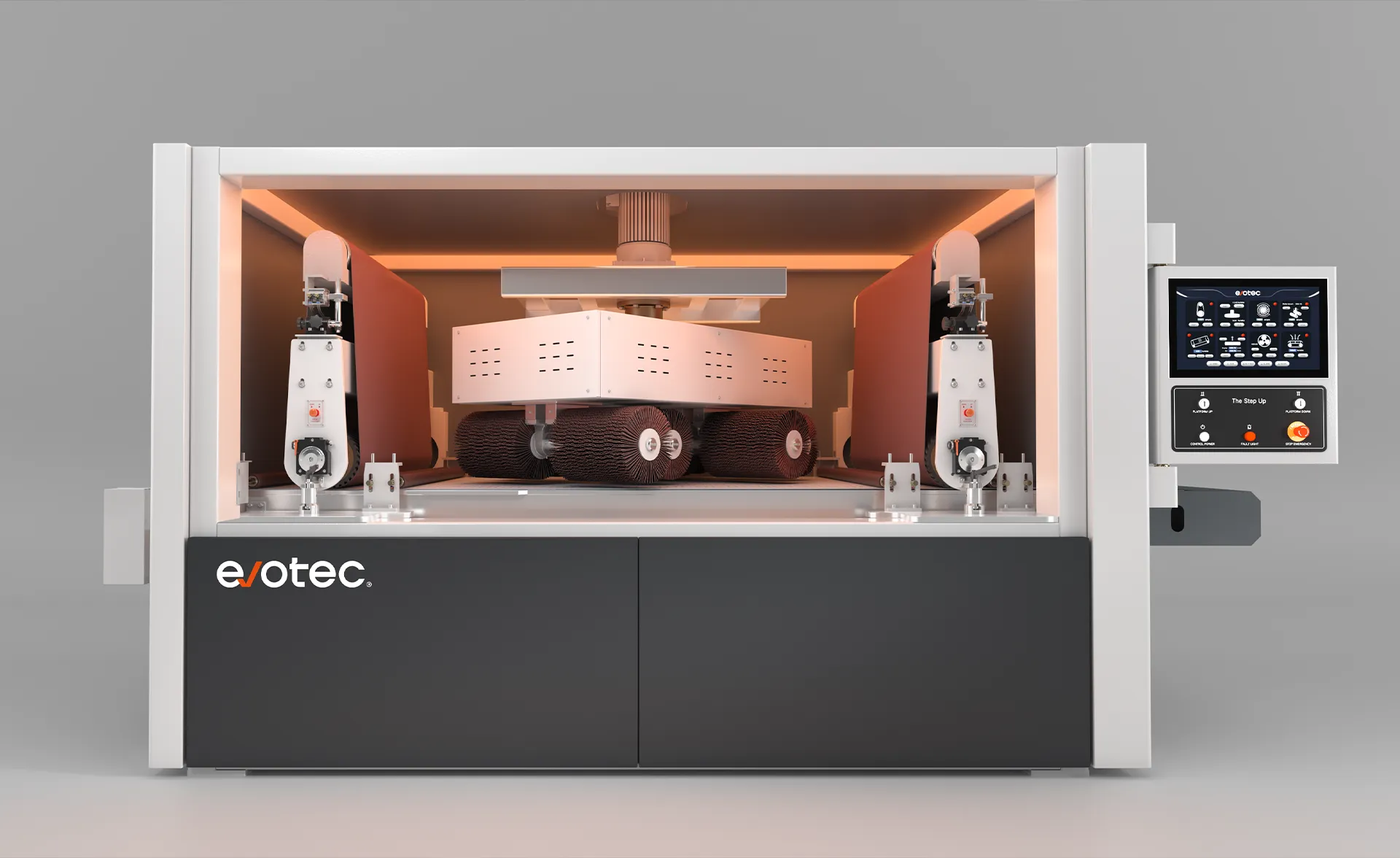
Mechanical removal happens before the part reaches pretreatment. On a wide-belt finishing machine, an abrasive belt takes scale off the faces and rotating brushes work around the cut edges and internal contours. The part leaves bare, so the cleaner and conversion coating only have oil and shop dirt to deal with.
The stronger argument is what happens to the edge in the same pass. A sharp 90° laser-cut corner is where coating film runs thinnest and where parts take the most impacts. A pickle stage leaves that corner exactly as sharp as the laser cut it. A brush pass that removes the oxide also breaks the edge to a controlled radius.
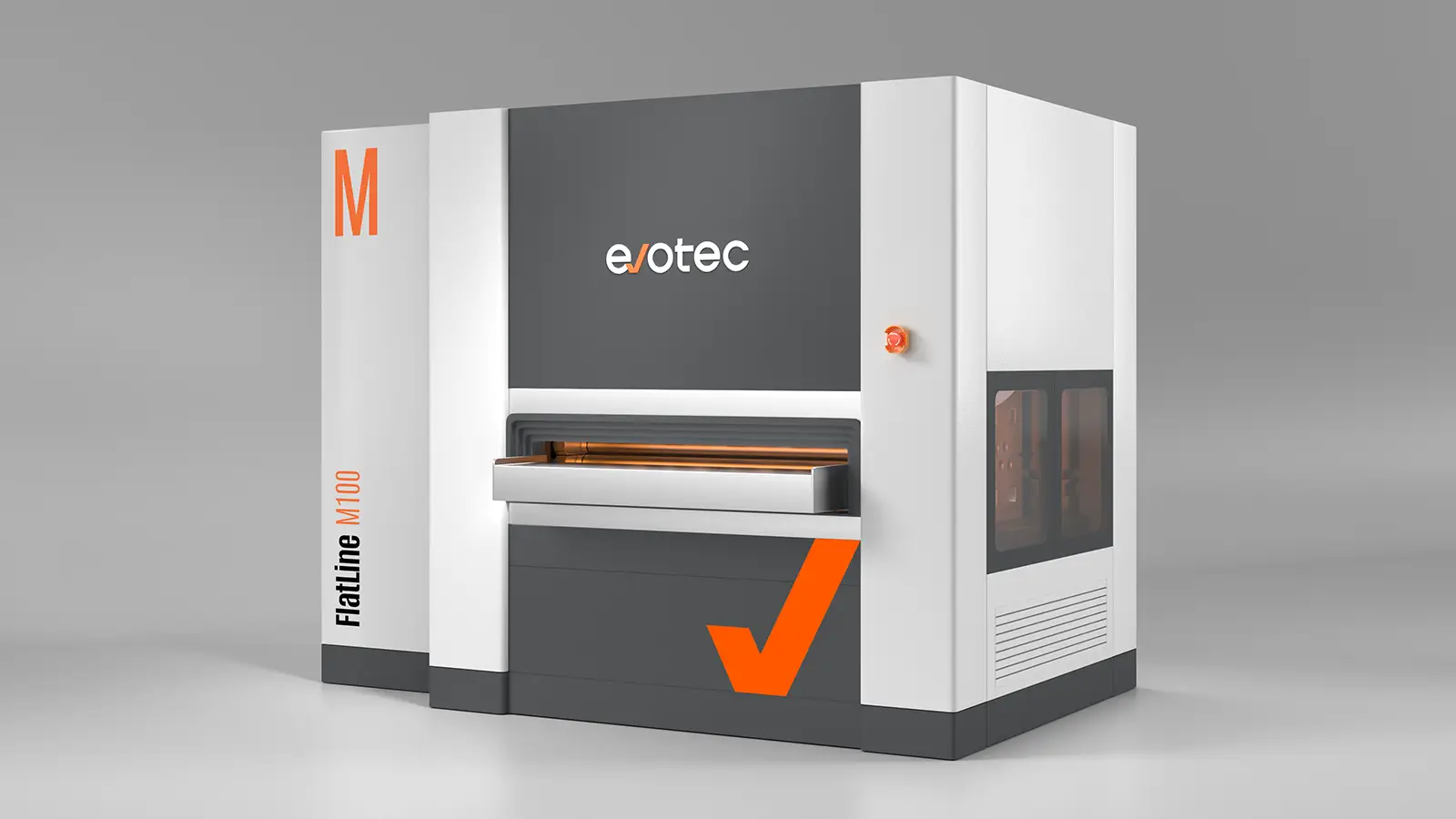
On our SurfeX finishing machines, de-oxidizing is done with abrasive belt and brush combinations, edge radii run from R0.3 to R2.5+, and parts from 50 × 50 mm (2" × 2") travel on a 1–7 m/min conveyor. For powder-coated parts we suggest R0.3–R0.5 mm (0.012"–0.020") as a minimum on exposed edges, and R1.0 mm (0.039") or more for outdoor or corrosive service. The oxide layer removal application page covers the typical parts, from enclosure doors to machine covers.
Part geometry decides between them
The split comes down to shape more than chemistry.
Flat parts with exposed edges
Brackets, panels, base plates and enclosure doors that lie flat on a conveyor are the clear case for mechanical removal. Scale and sharp edge come off together, and the wash line stays shorter. If parts are bent after cutting, remove the oxide while they are still flat blanks, before the press brake. That moves most formed parts into this group.
Formed parts and intricate profiles
Mechanical methods are often ineffective on intricate cuts, as the pickling article notes, and a conveyor machine cannot follow a flange that stands taller than its maximum workpiece height (100 mm on our SurfeX range). Weldments and parts coated after forming belong in the acid stage.
Mixed work
Shops running both can keep a smaller acid stage for formed and welded parts and take the flat volume off it. Less scale going into the bath means slower iron loading and fewer dumps.
The deburring machine overview explains how belt, brush and drum configurations differ if you are sizing a machine for this job, and our guide to deburring machines for laser-cut parts compares the models side by side.
Five questions to settle before you buy either
- What share of your carbon steel is oxygen-cut, and at what thickness?
- Do your coating specs name a minimum edge radius, or only "break sharp edges"?
- What do acid waste handling and bath maintenance cost you per year today?
- Are parts coated flat, or bent and welded first?
- Does your wash line have room for another heated stage?
This week's FABTECH in Las Vegas (October 21–23) puts a FINISHING Pavilion with more than 150 exhibitors in front of fabricators, according to Products Finishing's exhibitor preview. Most of what is on show there sits downstream of the edge. The edge itself is decided earlier, at the laser and at the machine that follows it. If the answers above point to flat parts and coating specs with a radius, start there.
Sources
- Chipping Edges, Products Finishing
- Solving Adhesion Issues from Laser Cuts, Products Finishing
- Tech Topic: Avoid deburring when laser cutting sheet metal, The Fabricator
- 25 Finishing Exhibitors to Visit at FABTECH 2026, Products Finishing
FAQs
Q1: What is laser oxide removal?
It is the removal of the thin iron oxide layer that oxygen-assist laser cutting leaves on carbon steel edges. The layer blocks pretreatment and coating adhesion. It can be removed chemically with an acid pickle or mechanically with abrasive belts and brushes.
Q2: Why does powder coat chip on laser-cut edges?
Standard pretreatment cleaners do not remove laser oxide, so no conversion coating forms on the cut edge. The powder bonds to the scale rather than the steel, and the scale breaks away under impact. A sharp, unrounded edge makes it worse because the film there is thin.
Q3: Can I avoid laser oxide by cutting with nitrogen?
Nitrogen assist leaves a largely oxide-free edge, and tuning focus, gas and speed reduces dross as well. Many shops still cut thicker carbon steel with oxygen. For those parts, oxide removal moves downstream.
Q4: Is acid pickling or mechanical oxide removal cheaper?
It depends on part mix and line layout. Pickling costs include acid, heating, bath monitoring, neutralizing rinses and waste handling. Mechanical removal costs include the machine, abrasives and brushes, and it rounds the edge in the same pass.
Q5: What edge radius should laser-cut parts have before powder coating?
Follow the coating spec if it names one. Without one, we suggest at least R0.3–R0.5 mm (0.012"–0.020") on exposed edges, and R1.0 mm (0.039") or more for outdoor or corrosive service.
Next Steps
Our page on oxide layer removal shows the parts and finishes this process covers.
If your powder coat is chipping at laser-cut edges, send us part drawings or a few sample parts. We will run them and show you the edge and surface they come back with.